International Symposium on Mining with Backfill Series
The official website for the International Symposium on Mining with Backfill, a long-running, world-renowned conference series. I handled it end to end: brand, information architecture for decades of proceedings, and a publication search system — working as designer, project manager and front-end developer.
- An academic series Brand & Event identity.
I created the brand and a design system so the site felt credible and consistent. - Designed as a system, not a page.
I translated the client's requirements into how the whole thing works end to end — shaping the front-end experience while planning through the back-end flow at the same time.
- Brand Design & Design System
- Information Architecture
- Publication Search/Conference Archive
- Front-end Development
Overview
Brand, information architecture and website for a conference series with five decades of research behind it, designed and built from zero.
The International Symposium on Mining with Backfill (ISMB) is a long-running, world-renowned conference series, first held in Mount Isa in 1973 and now at 14 editions across seven countries. It is run by a council of leading professors and principal engineers from universities and companies around the world, and sponsored by T Engineering. I took it from zero to launch: I pitched the brand, designed the system, planned the architecture for decades of proceedings and built the front-end, working as designer, project manager and developer.
Objective
Give a fifty-year-old series a brand and a home that carry its authority: credible to the experts who run it, easy for delegates to join, and open to researchers who need decades of papers.
The Challenge
Designing for the Leading Figures of a Field
The stakeholders here are not typical clients. The council is made up of professors, principal engineers and industry leaders across several countries, and the audience is just as international. Every decision had to hold up in front of people who are experts in the field.
- Credibility first — the brand and site had to read as an academic series, restrained and rigorous, not as a vendor page.
- Decades of proceedings — papers from every edition had to stay findable, and the structure had to keep working as new editions are added.
- Event and archive in one place — each edition brings a new host city, new dates and a new call, while the archive stays constant.
- Attendee access — the most recent symposium's papers are exclusive to registered attendees, so the archive needed open and gated states.
The site had to do the persuading: bring council, sponsors, delegates and researchers into one place and make the series look as established as it is.
Brand
The Brand Concept: Layers of Depth
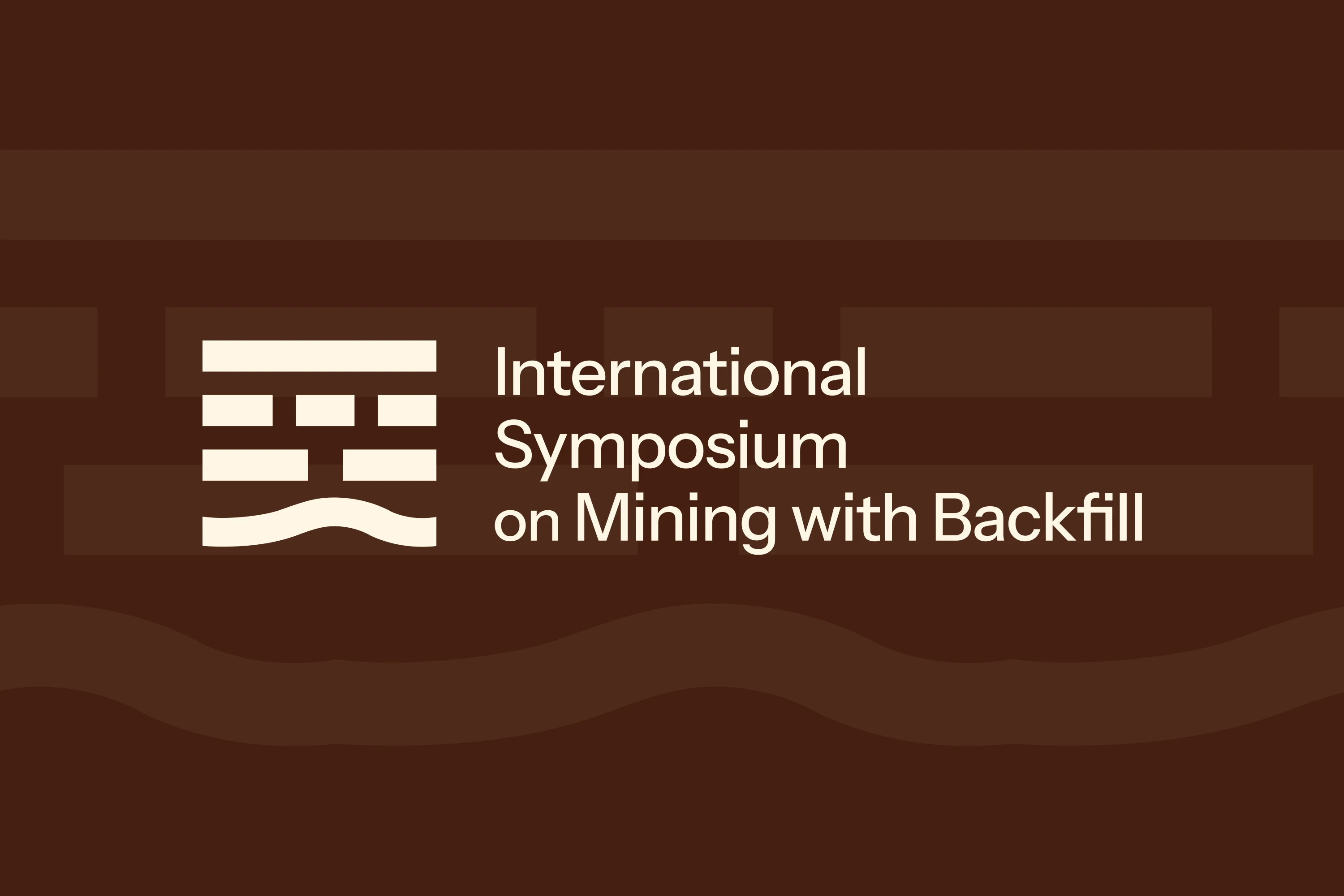
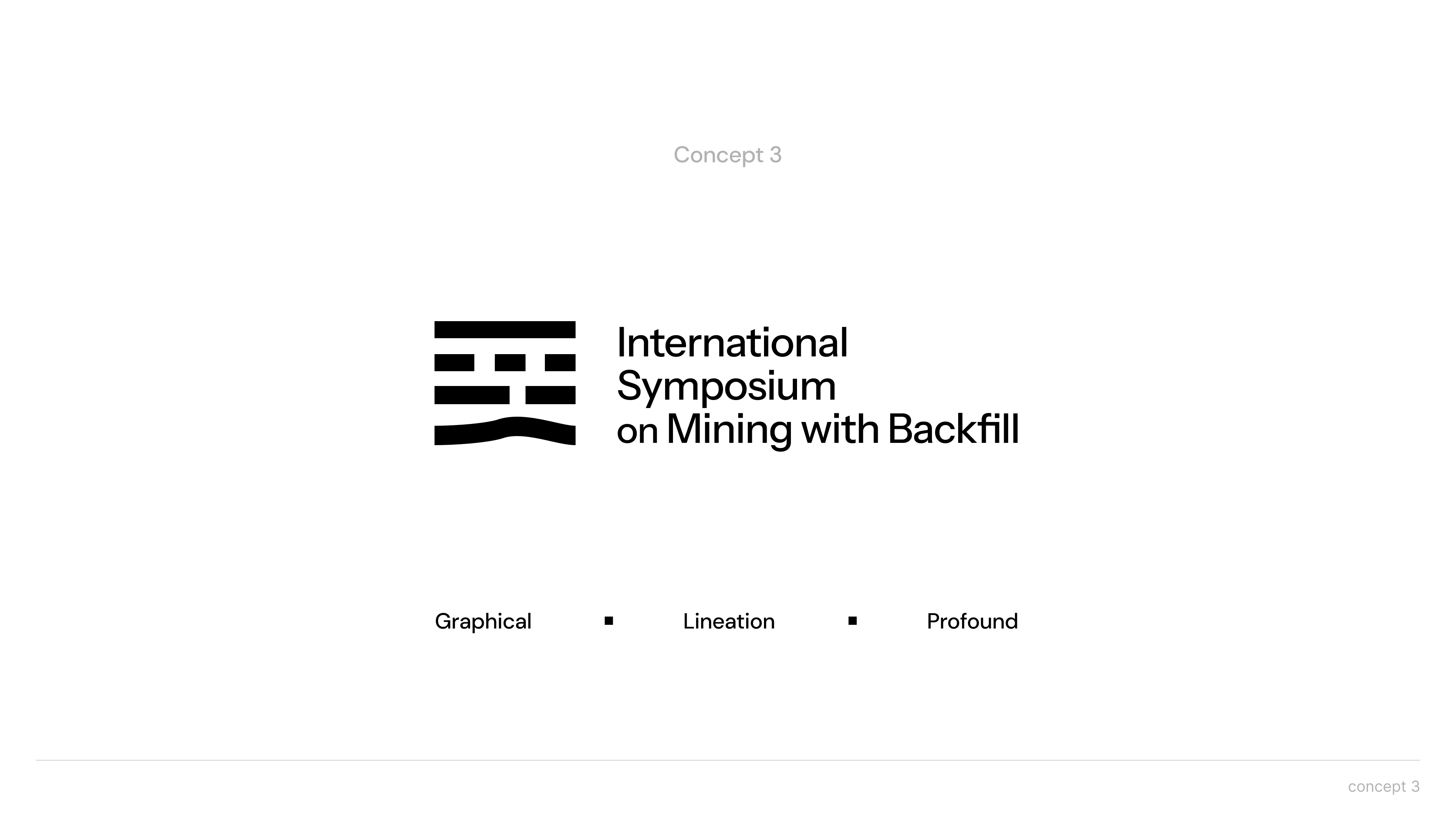
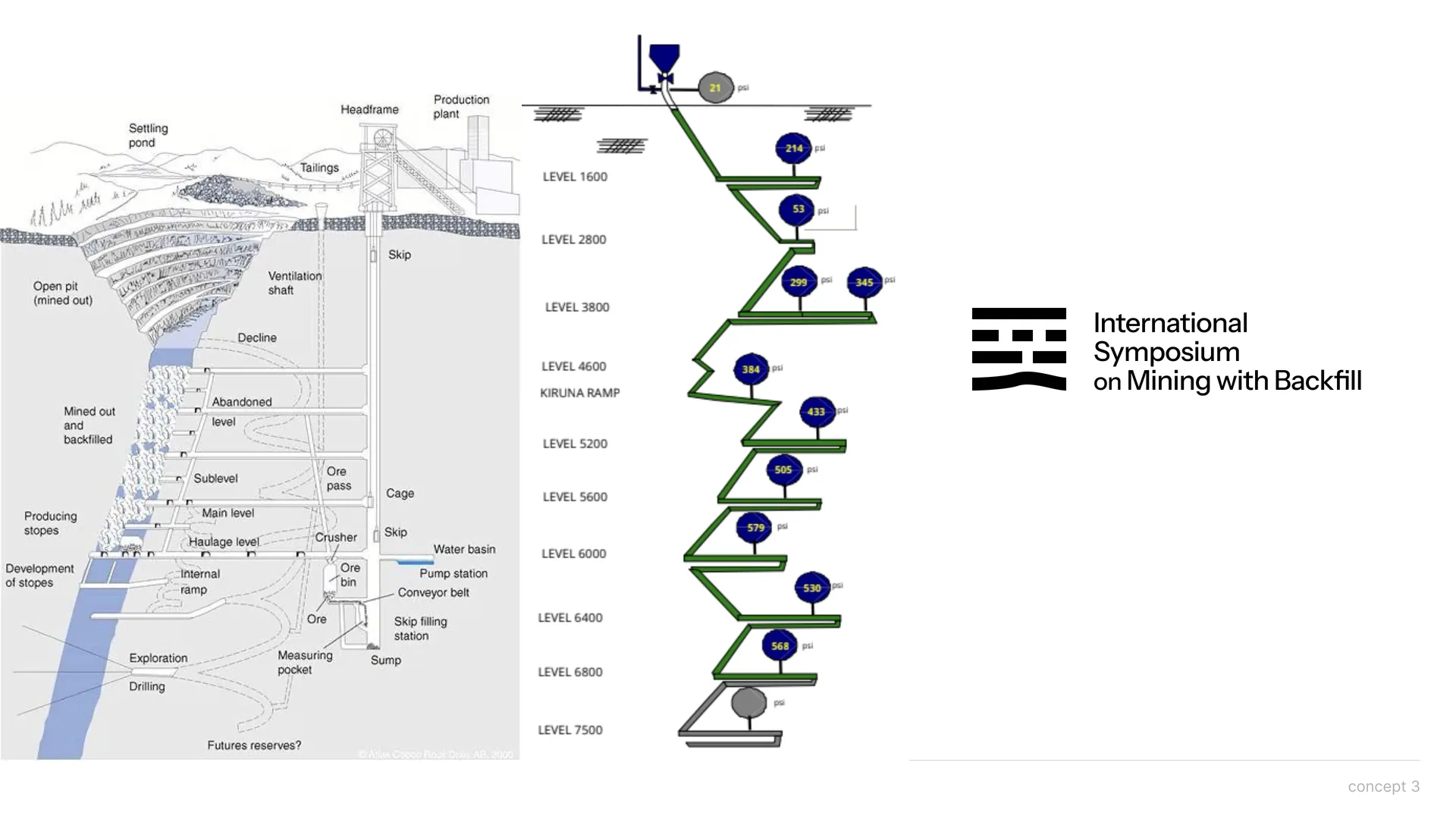
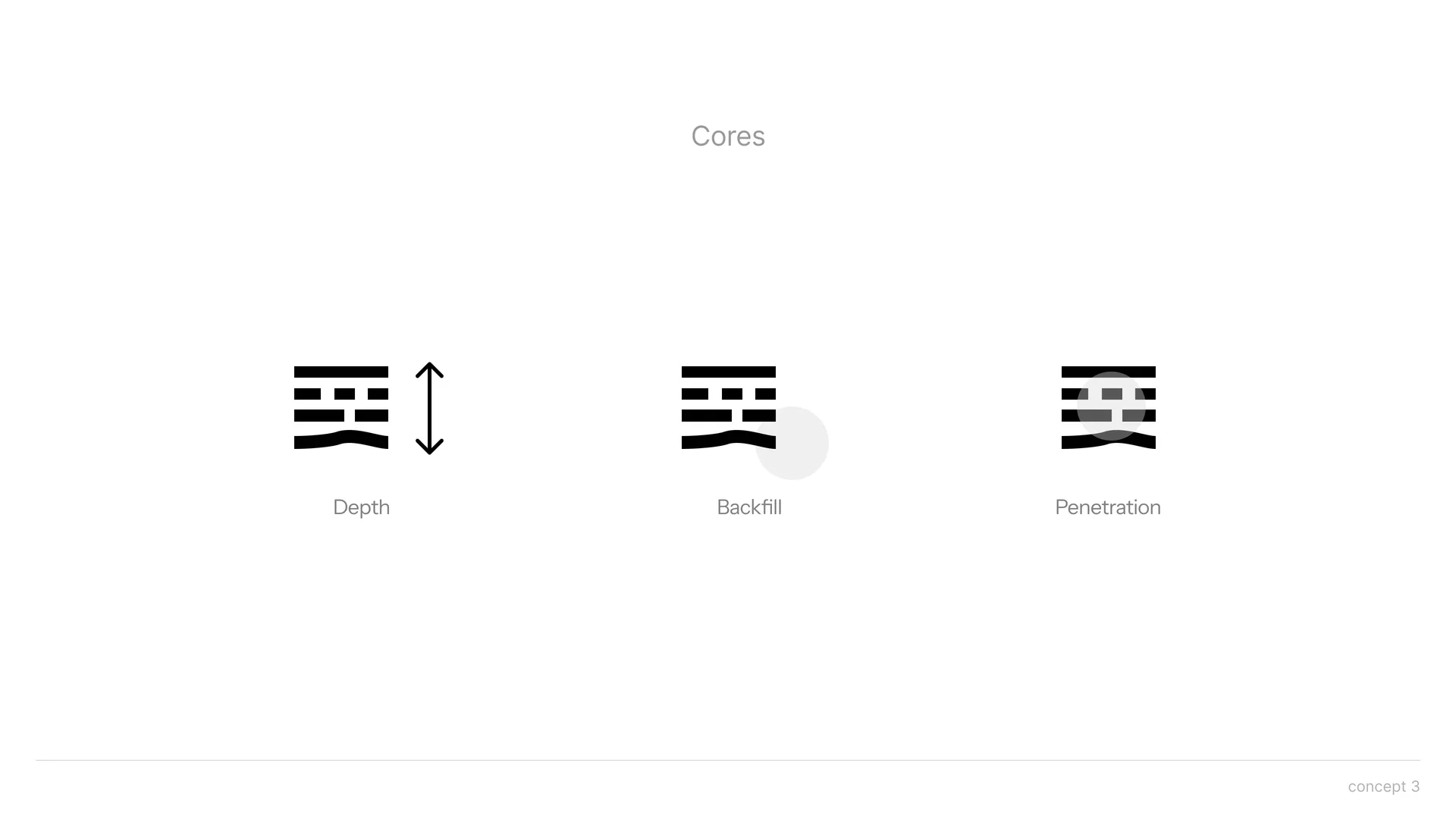
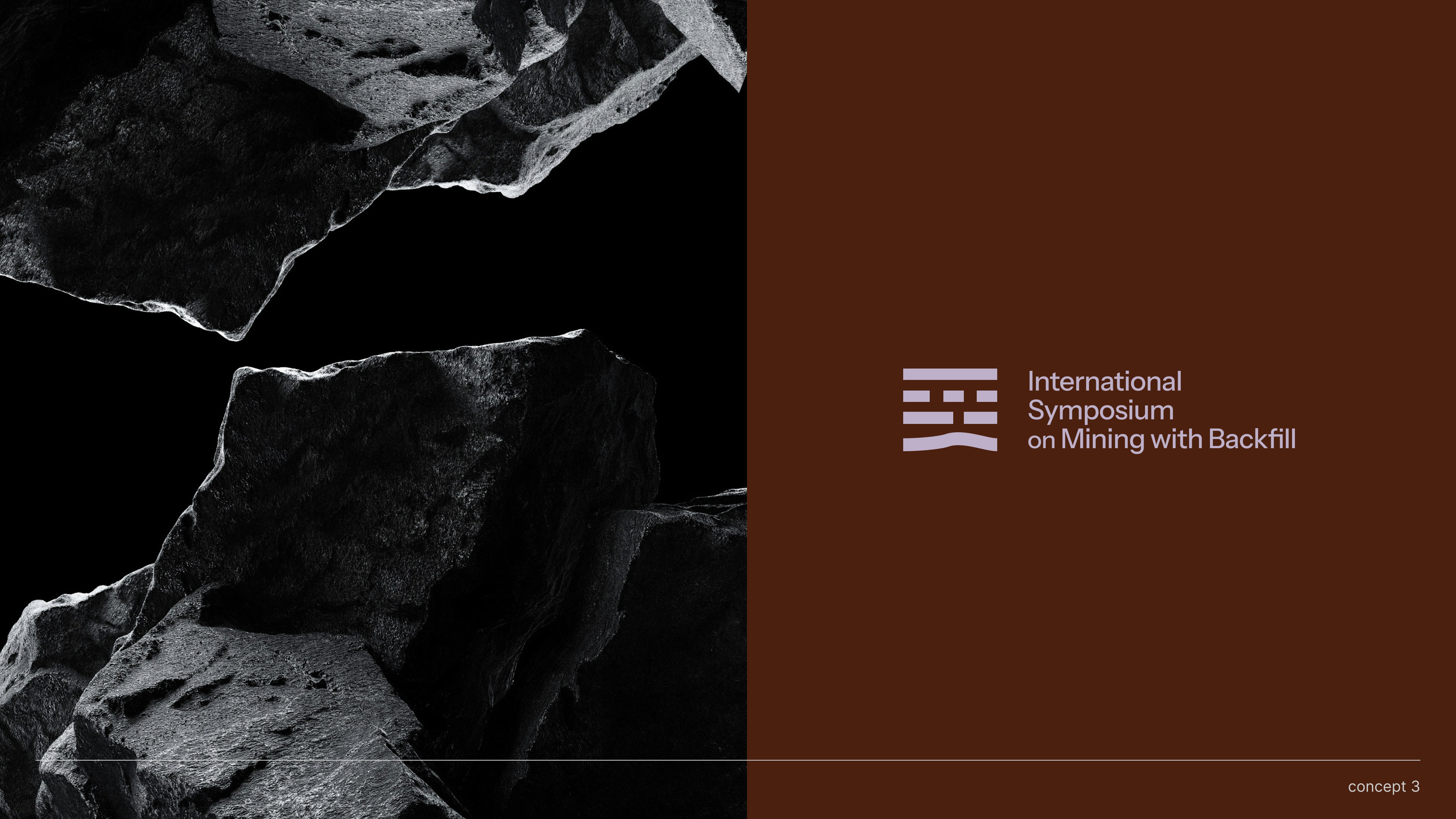
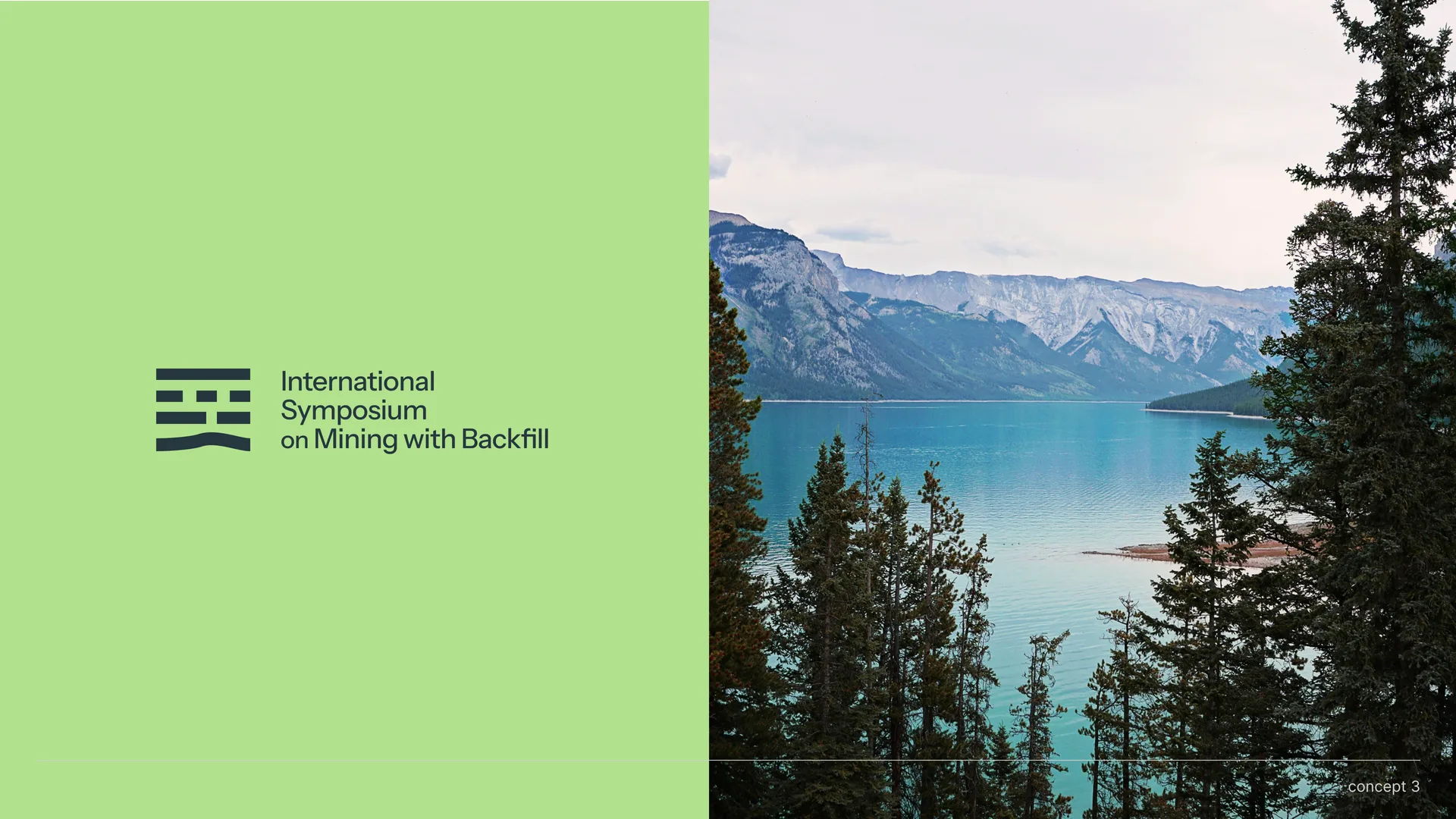
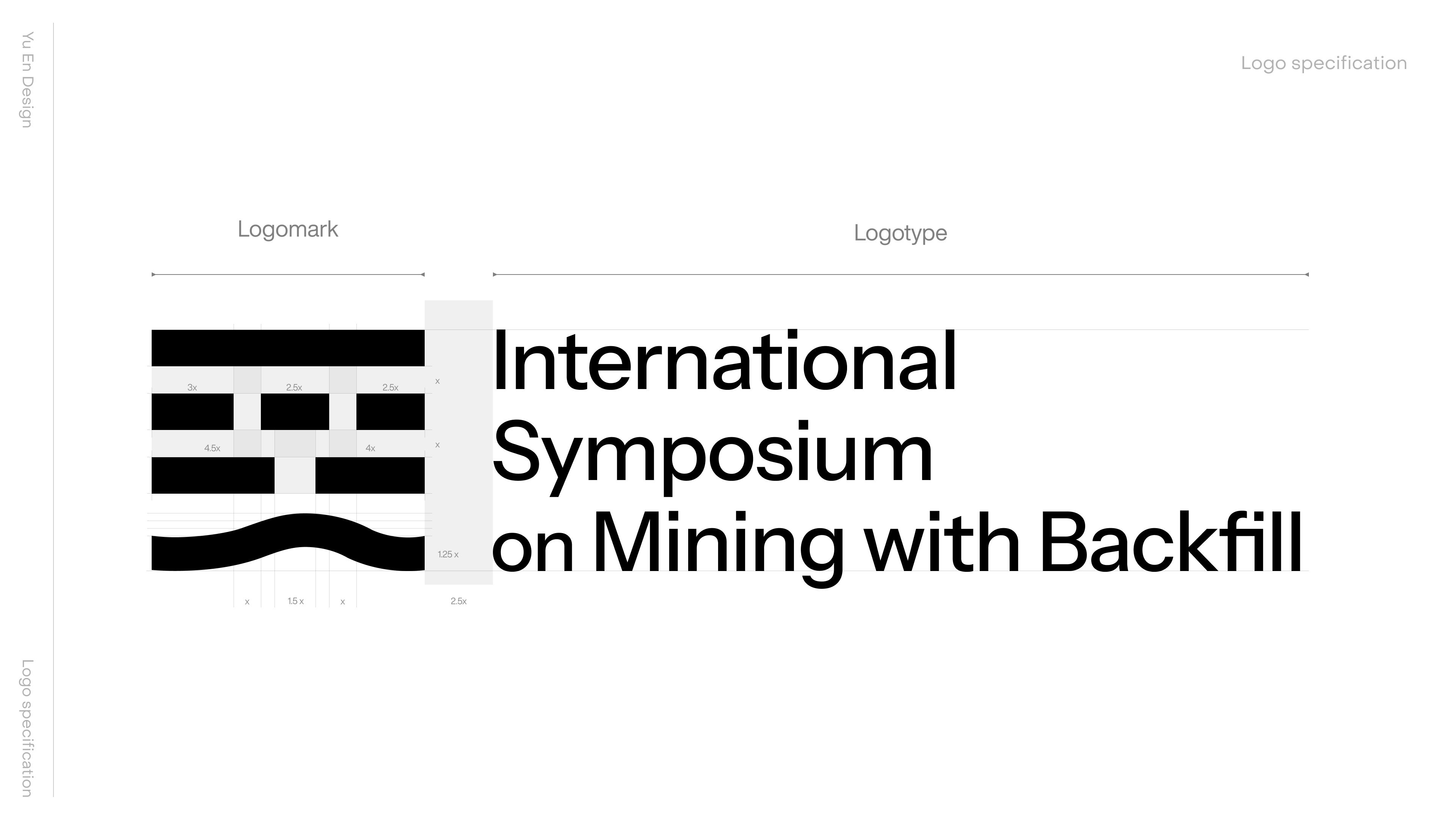
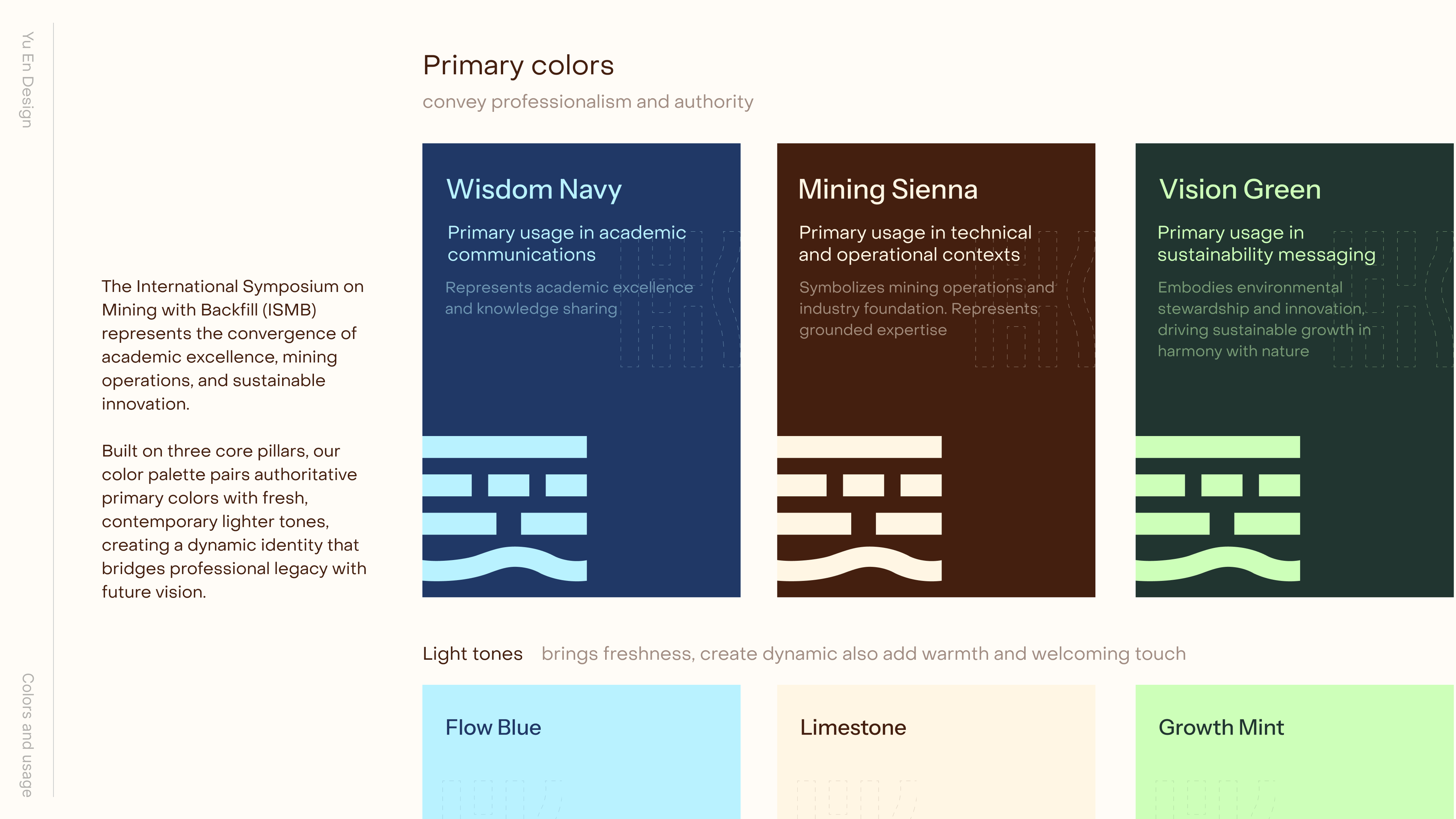
I pitched a concept that came from the subject itself: backfill is built in layers, level by level, underground. The mark stacks horizontal strata over a wavy base, so depth, fill and penetration read in one restrained, graphical shape. It scales from a full lockup to a compact mark and an edition lockup. The palette starts from the ground itself: sienna brown for the mine's soil, navy blue for wisdom and knowledge, and green for sustainability.
The Brand System
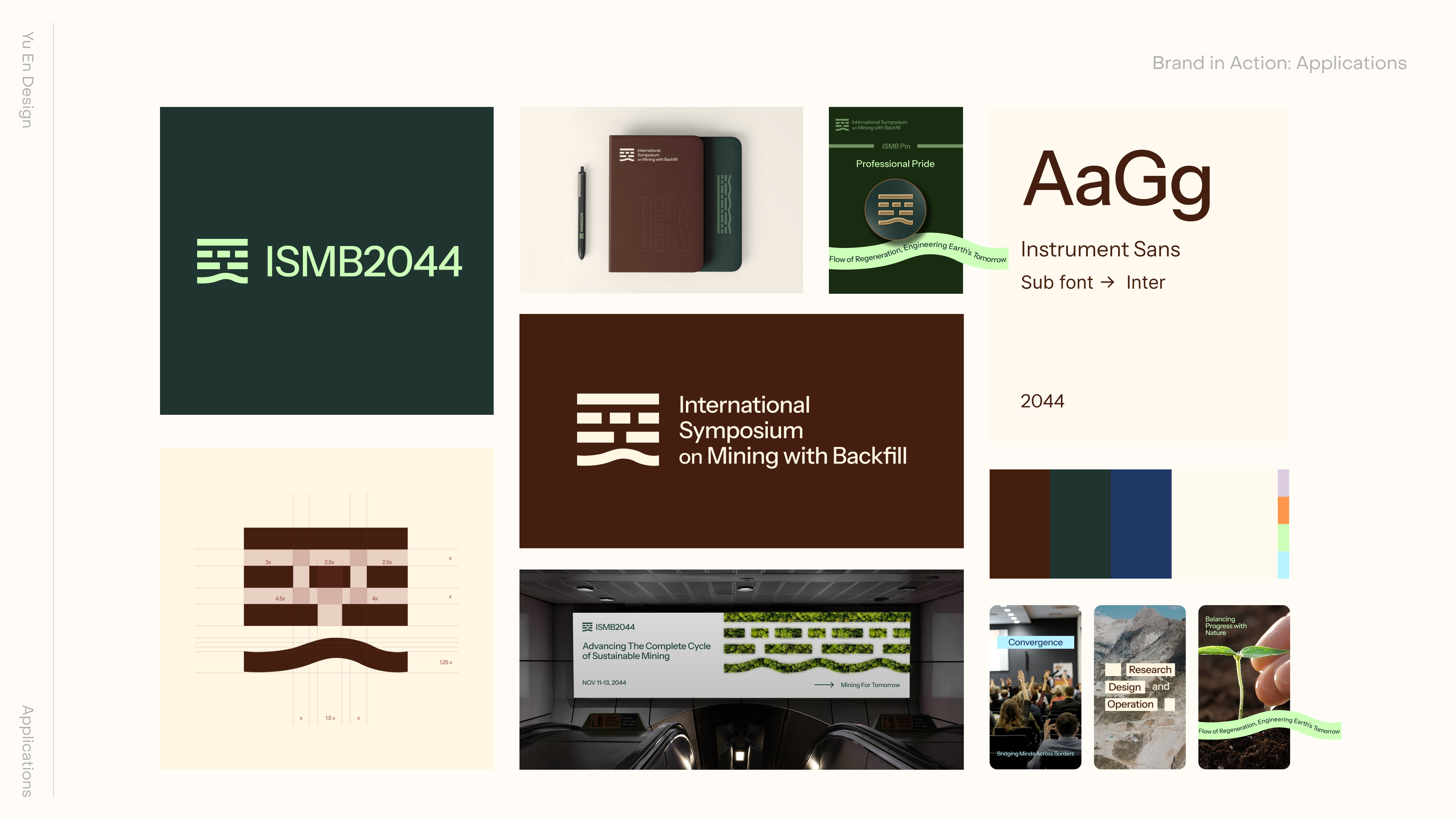
I developed it into a logo specification, a colour palette and a design system, so the site and every other application feel like one series. The brand extends beyond the site into motion applications and a presentation template the committee can reuse for each edition.
Applications: Social and Templates
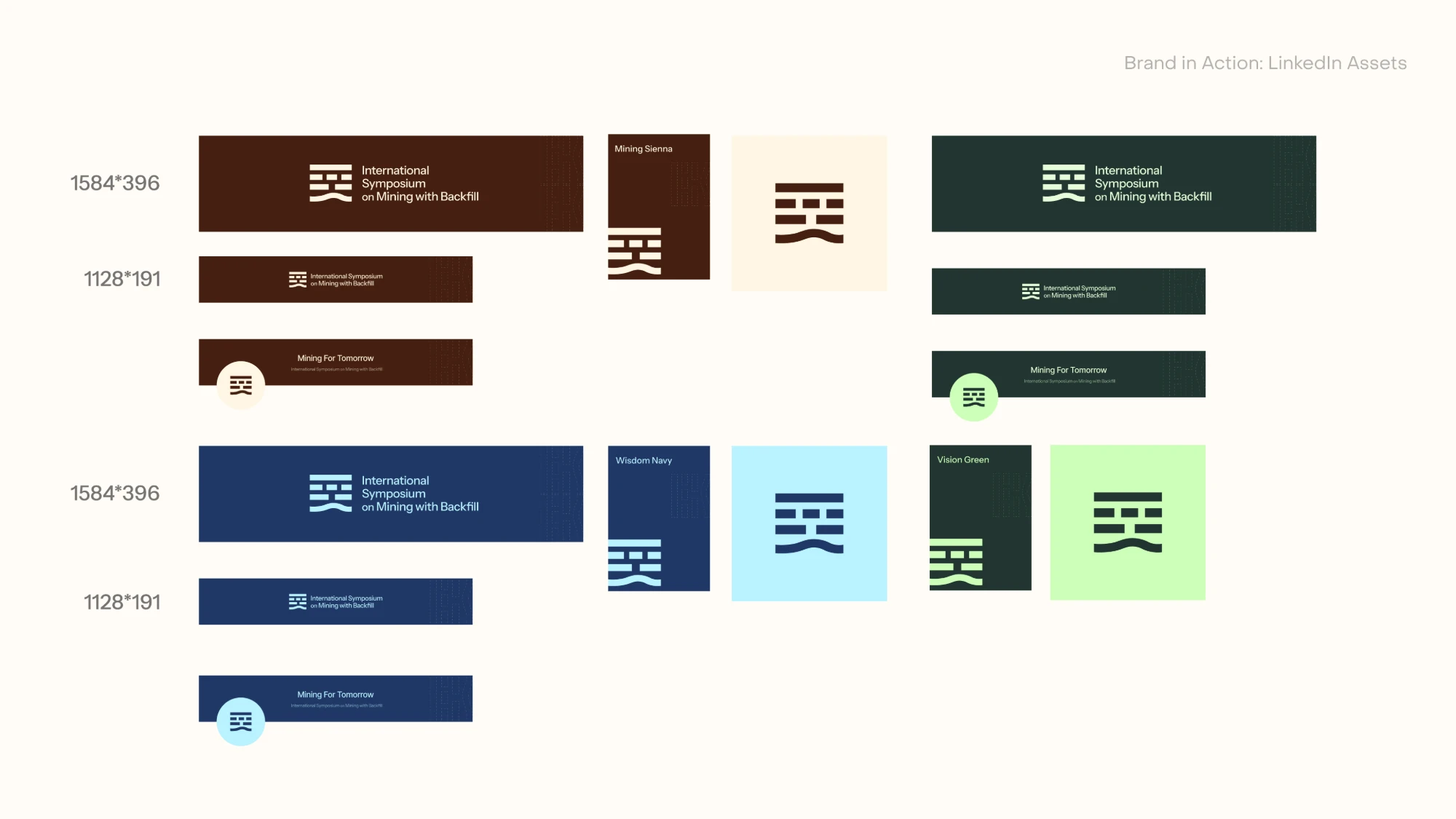
I carried the system into the channels the symposium actually uses. The LinkedIn showcase page has its own avatar and banner set in every colourway, in two banner sizes, and the brand applications and presentation template are ready for the marketing team to use directly. Each edition can publish on its own without a designer, and every post still reads as the same series.
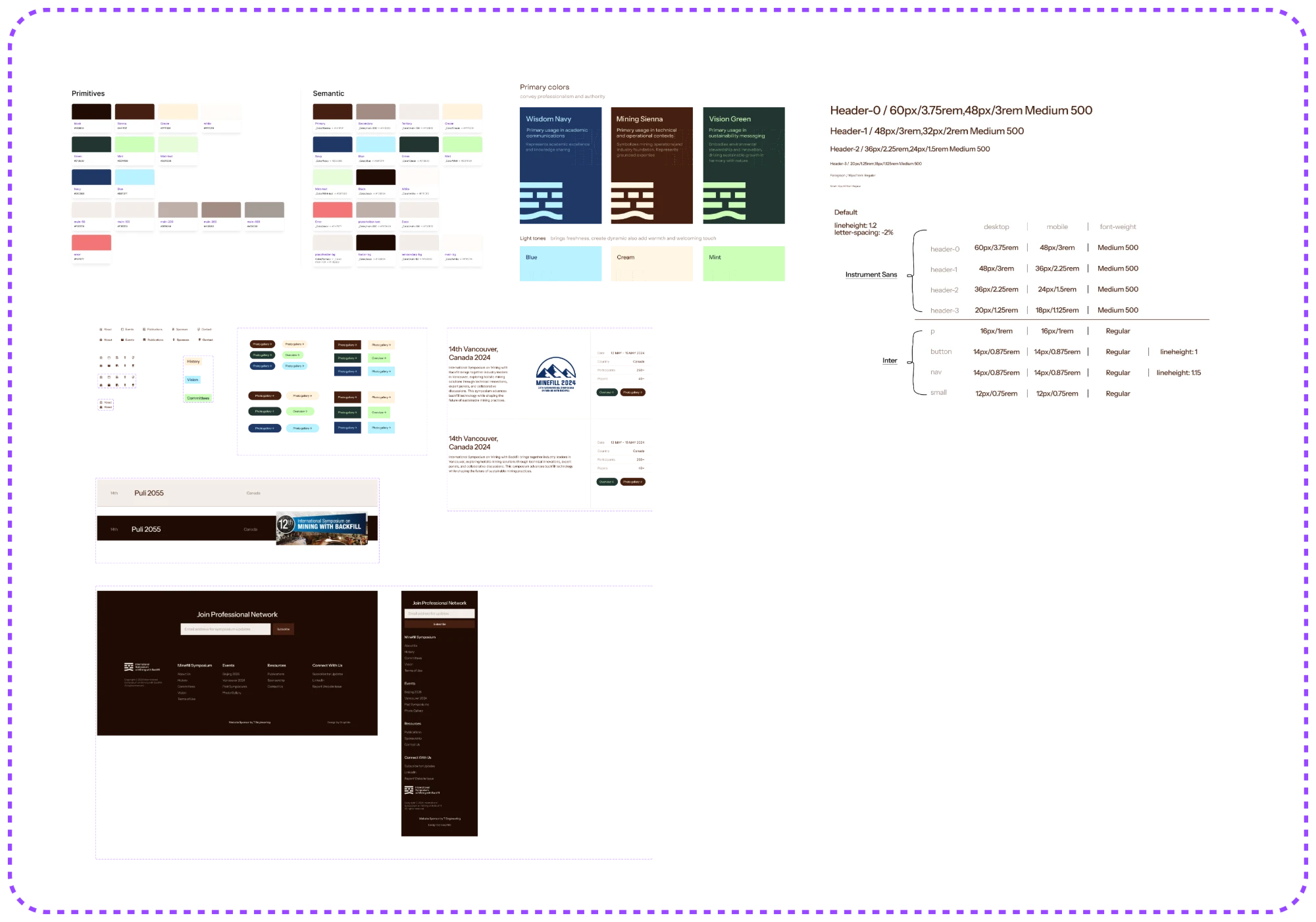
Website Design System
The brand became the system the website runs on. I built the UI from a small, strict component library of 7 components and 45 variants. Because I built the front-end too, every component shipped as designed.
Design Process
Information Architecture
I organised the site around what each visitor comes for: the next event, the people behind it, the papers, and the sponsors. Home leads to About (history, council, vision), Events (upcoming, most recent, past symposiums), Publications (latest papers and historical archives), Sponsors and Contact.
Publication Search and Conference Archive
Every edition’s papers live in one archive that visitors browse by year and sort by title or date, with title, authors, keywords, abstract and a PDF download per entry. I shaped the front-end experience while planning the back-end flow at the same time, so the archive can keep growing with each edition and the newest papers can stay attendee-only.
Front-end Build & QA
Results
Delegates, papers and countries are the Beijing 2026 highlights from the symposium site.
Reflection
What I learned
Working with stakeholders who are leading figures in their field taught me how to balance an international audience with a rigorous academic tone.
What's next
The symposium will keep going, every one to two years in a new host city, and every edition from Lima, Peru in 2028 onward will carry the identity and site I designed.